Have questions about occupational therapy driving assessments, NDIS funding or what to expect when working with Drive On Therapy? You’re not alone.

Here we answer the most common questions from clients, families and support coordinators so you can feel more confident and informed at every stage of your journey.
We provide occupational therapy services to assist with driving and transportation. This includes occupational therapy driving assessments to:
We also provide tailored driving rehabilitation and capacity building services. This may include adapting to vehicle modifications, regaining skills or accommodating to changes after the onset of a medical condition. We also work with aspiring new drivers to build their abilities as they embark on the journey of learning to drive.
No, you can complete a self-referral on our website. There are some services where a referral is preferred, such as an occupational therapy driving assessment to evaluate the fitness of an individual to continue or return to driving.
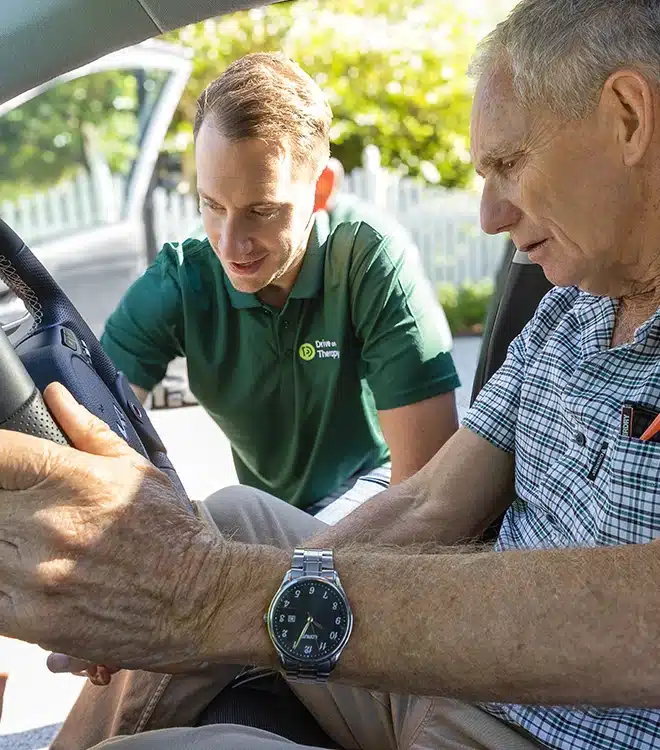
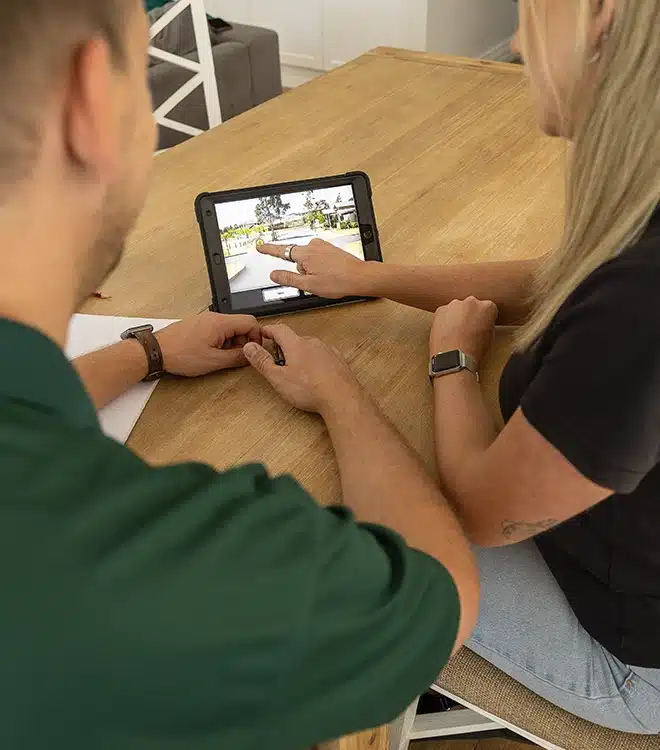
An occupational therapy driving assessment always includes an off-road and an on-road component. The off-road component is completed at your home or in our clinic. It consists of several assessments to consider your driving and medical history, movement and strength, coordination, reaction time, vision, and cognitive and psychosocial abilities relevant to driving. The on-road component is completed in our dual-controlled vehicle. The on-road session will be different depending on the purpose of the assessment.
For example:
We prefer to always complete the occupational therapy driving assessment over 2-days because it is tiring for both the client and their family, and the occupational therapist to complete the entire assessment in 1-session. The off-road and on-road portion of the assessment are typically 2.5, hours in duration per session.
Conducting the off-road and on-road session on multiple days ensures we can best meet your needs. This includes ensuring we can gather a permit from the Department of Transport for you to drive the vehicle if your licence is not current. It ensures we can prepare our vehicle or collect the appropriate equipment for you to trial modifications that are suited to your function.
We can complete the assessment in 1-day if required and do offer this as a shortened assessment for clients where we are only assessing their fitness to continue driving.
We aim to see you as soon as possible. Please check online.
Yes we do, we can add you to our cancellation list providing you have scheduled an appointment.
The cost will vary depending on the purpose of the assessment, and type of driving rehabilitation or capacity building services we are providing. For example, assessing the capacity of an existing driver is a less time-consuming service, opposed to trailing a range of vehicle modifications. All pricing is available on our website.
The time to complete the assessment, including number of sessions will depend on the service being provided. When assessing your fitness to drive, we typically complete this assessment in 3 – 5 hours, excluding travel and reporting to follow. Assessing for vehicle modifications or the potential of an aspiring driver to gain their licence takes considerably more time.
These services typically take a total of 13-hours including travel and reporting. We recommend allowing 2.5 hours per off-road and on-road session, so we don’t run overtime and interrupt your schedule.
The report will be completed within 2-weeks following the completion of all assessment sessions. There may be times when it takes longer to complete your report due to waiting for additional information, such as quotations for specialised driver training or advice surrounding vehicle modifications from a motor body builder.
We offer occupational therapy driving assessments from our clinic in Yokine or we can come to you providing you are within 30-minutes of our clinic. Travel charges apply per our pricing policy.
The assessment is completed by a driver trained occupational therapist. A driver trained occupational therapist has completed additional training and certification in order to assess your driving abilities.
Certain assessments, such as evaluation of fitness to drive, will also include a licensed driving instructor to assist with the on-road portion of the assessment.
No. The on-road assessment must be completed in a dual-controlled vehicle. A dual-controlled vehicle has an additional accelerator and brake pedal on the front passenger side. This is necessary for safety reasons and practice-standards that must be adhered to when completing an occupational therapy driving assessment.
There are some rare circumstances when the assessment may be completed in your vehicle. Examples of this are when unique vehicle modifications are required that is not available in a dual-controlled assessment and rehabilitation vehicle.
Travelling to regional and remote locations may also pose challenges with the availability of a licensed Driving Instructor and alternative vehicle arrangements may be considered.
Visual assessment with an optometrist or ophthalmologist is often required if there are changes to your vision that warrant a conditional licence. Examples of this include visual acuity where the binocular is worse than 6/12 with glasses, monocular vision, diplopia and visual field impairments. Certain medical conditions also require an assessment by an Optometrist or Ophthalmologist, including:
Please see your optometrist or ophthalmologist to complete the vision assessment form prior to your assessment if the above applies to you. The occupational therapist may request that you undertake a formal vision assessment if there are concerns identified in your occupational therapy driving assessment.
It may be necessary to have a Department of Transport M107A Medical Assessment Certificate completed by a medical practitioner to support the recommendations in your occupational therapy driving assessment. This is often required with the notification of any new medical conditions or changing conditions on your drivers licence. If so, your occupational therapist will advise and provide the form necessary to take to your doctor.
Occupational therapy driving assessments can be booked online if we are evaluating fitness to drive. A self-referral or medical referral can be completed after booking.
Other appointments are scheduled after submitting a referral. We will contact you upon reviewing the referral information, to ensure we can offer you an appropriate service.
Yes. We provide documentation to support many needs of NDIS participants and members of other funding schemes. This may include the evidence and recommendations for assistive technology (AT) or vehicle modifications to be funded. It may include recommendations for specialised driver training, driving rehabilitation with an occupational therapist or other services based on the needs of the individual that are related to their disability.
We work with all age-groups, depending on the services being provided. For the assessment of vehicle modifications for community access, we work with individuals of all ages. For driving-supports, we work with individuals who are 15-years old and over.
We work with every disability and medical condition.
Yes. We will always try to accommodate your preferences.
We currently provide services regionally in Geraldton. We may be able to provide services to other regional and remote locations. Please contact us to discuss further.
Yes. We can provide the assessment in a manual or an automatic vehicle. We recommend completing the on-road assessment in the same transmission of vehicle that you most recently drove.
No. The Department of Transport will need to be in receipt of the occupational therapy driving assessment and a Department of Transport M107A Medical Assessment Certificate completed by your treating doctor before considering a change in your licence status. The Department of Transport will notify you when you can return to driving. This normally takes 2 – 3 weeks after all documentation has been submitted to the Department of Transport.
Yes. We almost always progress to the on-road assessment as we know that not everyone performs at their best in clinic-based and tabletop tests. A purpose of the on-road assessment is to determine if challenges with function identified in the off-road evaluation are in-fact impacting driving performance. The on-road assessment may also identify issues that were not seen in the off-road assessment.
An occupational therapy driving assessment is intended to determine whether a medical condition or disability impacts the ability of an individual to drive. It is a comprehensive, evidence-based assessment that consists of standardised and functional assessments between off-road and on-road sessions. An occupational therapy driving assessment is completed by an extensively trained and qualified allied-health professional and designed to support people with medical conditions to see them perform at their best. An occupational therapy driving assessment is regarded as the gold-standard when considering driving and medical conditions.
A Department of Transport Practical Driving Assessment is an on-road test to determine if driving abilities are in-line with the licensing competency standards. It is designed for new drivers gaining their licence for the first time. It is completed by a Department of Transport assessor without training in rehabilitation and disability.
There may be times when a Department of Transport Practical Driving Assessment could be considered instead of an occupational therapy driving assessment. This includes challenges accessing an occupational therapy driving assessment in regional and remote locations. It may also include when there are financial constraints.
Yes. We will gain a permit from the Department of Transport to complete the on-road portion of the driving assessment. The only time we are unable to gather a permit is if your drivers licence has been suspended or cancelled for reasons other than medical grounds. Please get in touch with us to discuss your personal circumstance.
Vehicle modifications are adaptations to a vehicle to support access, mobility device stowing or driving. Vehicle modifications change the way that the vehicle is operated compared to the factory-fitted specifications. They are typically permanent alterations to a vehicle that require supply and fitment from a reputable motor body builder.
An occupational therapy driving assessment is recommended to evaluate your function to consider if vehicle modifications should be pursued. The driver trained occupational therapist will develop a shortlist of equipment and arrange an opportunity for you to trial these modifications. Several trials may be undertaken to determine the most appropriate driving aid to suit your function in-line with the medical condition or disability including longevity of driving with anticipated changes in function. Please follow this link for more information on our equipment.
In Western Australia, vehicle modifications must be fitted by a reputable motor body builder. Most vehicle modifications, including those that alter the way a vehicle is driven, require the vehicle to undergo an assessment through an Authorised Inspection Station (AIS) and issuing of a modification permit before they can be driven. The vehicle modifier will support you through this process.
The NDIS will fund vehicle modifications for driving, access and passenger transportation where they are related to the participant disability, help with the pursual if goals, effective and beneficial, value for money and are legally safe. Further information regarding the NDIS funding criteria and Operational Guidelines for Vehicle Modifications and Specialised Driver Training can be found online: Vehicle modifications | NDIS.
In most circumstances, yes. The NDIS has a responsibility to ensure that any modifications that they fund for your vehicle are legal and safe. This means the agency needs to know that you remain fit to drive with your disability. A vehicle modification assessment for an existing driver of modified vehicles is an excellent opportunity to review new equipment options and trial them to ensure your new vehicle is equipped with the best equipment for your current function and driving longevity.
Yes. We complete assessments for driving and passenger-only conversions.
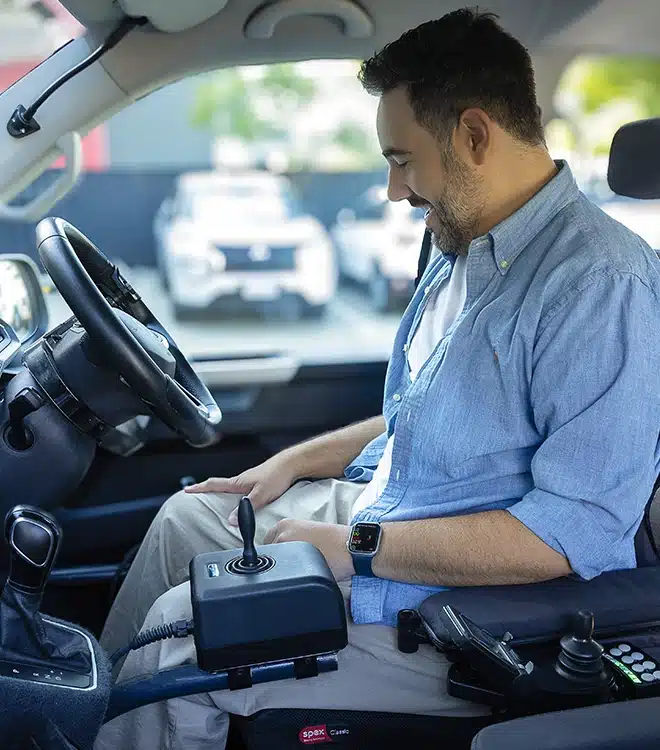
High level driving aids are considered power-assisted driving controls that provide acceleration and braking, and steering through secondary input devices. They are considerably more advanced than conventional driving aids where braking and steering is of a mechanical nature. Examples of high-level controls include joystick steering, joystick braking and accelerating, and foot steering. Considerable assessment is necessary in consultation with a vehicle modifier to determine the most suitable equipment for your needs. More information on high-level driving aids can be found here.
Yes. We develop and administer occupational therapy programs to assist with returning to driving after the onset of a medical condition, which may include adapting to vehicle modifications. We also provide tailored capacity building programs for people entering the driving arena for the first time. This may include a combination of pre and early-driving strategies to assist with moving from the passenger to the drivers seat. We also offer ongoing support all the way through to gaining your first licence.
We need to have a thorough understanding of your disability or medical condition and how it impacts your function to determine how we can best support you.
Occupational therapy capacity building is administered by an experienced health professional who has also undergone postgraduate training in driving. Occupational Therapy capacity building follows a therapy model consisting of goals and strategies that have been identified through an occupational therapy driving assessment, and is likely to include a combination of approaches both within and outside of the vehicle to support the individual build their skills in-line with their disability or medical condition.
Most of our capacity building sessions are 1-hour in face-to-face duration. In order to deliver a capacity building session, it is essential for the Occupational Therapist to prepare, analyse performance and complete a case note. We allow for 0.21 hours (12.5 minutes) for the preparation and 0.21 hours (12.5 minutes) for the performance analysis and case notes following the appointment for a 1-hour face-to-face appointment. This means the minimum cost for a 1-hour face-to-face appointment is 1.42 hours. Please follow this link for more information on our pricing.
In most cases, no. The role of the Driver Trained Occupational Therapist, along with your Doctor is to provide advice to the Department of Transport regarding your suitability to drive including any conditions such as driving with vehicle modifications. However, the Department of Transport make the final licensing decision and will advise you, in-writing typically within 2 – 3 weeks of being in receipt of all the necessary reports and medical certificates.
Yes. Our assessments of potential to drive mostly incorporate passenger-only activities. If required to drive the vehicle, in most circumstances the Department of Transport will issue a temporary permit for this to occur as part of the Occupational Therapy Driving Assessment.
Yes. We will require a copy of the report and recommendations from your previous provider. We will arrange a time to review the report with you and will develop a therapy plan consisting of goals and strategies aligning to your needs.
It is important that any permanent or long-term medal condition that could impact driving is reported to the Department of Transport. This is part of the Mandatory Reporting Laws that have been in-place since 2008. Failure to report a medical condition may result in a fine or other infringements. Examples of medical conditions that require reporting are permanent injuries and disabilities, chronic illnesses, cardiovascular disease, epilepsy, diabetes and vision problems. Please refer to the Department of Transport website for more information on mandatory reporting including submitting this information online.
Not necessarily. However, it is essential to report a diagnosis of Autism and other neurodevelopmental conditions such as ADHD to the Department of Transport either when applying for a learners permit or if diagnosis has occurred after gaining your drivers licence. The first point of call is to complete a medical assessment with your GP or other treating doctor. Your doctor may refer you for an occupational therapy driving assessment if further advice is requested.
There are certain situations where an occupational therapy driving assessment is required, such as seeking to gain funding for specialised driver training through the NDIS. The occupational therapy driver assessment will first evaluate readiness of the individual to commence learning to drive and will then consider supports, possibly specialised driver training that may assist with building capacity alongside supervised driving and other informal supports provided by a parent and/ or guardian.
An assessment is requested to evaluate the impact a medical condition or disability has on ability to learn or continue driving. The assessment incorporates several standard and standardised components, completed by a certified driver trained occupational therapist. The assessment is compliant with national and state-based standards, such as Austroads Medical Standards for Licensing 2022, Competency Standards for Occupational Therapy Driving Assessments 2018 and the Department of Transport WA Competency Standards for Private and Commercial licenses. This means the assessment follows a consistent, evidence-based structure for valid and reliable outcomes.
Knowledge, and driving habits and techniques are important, they are unlikely to be the defining factor regarding the outcome of the assessment.
Gaining a good nights sleep or being rested before the assessment is a good place to start. Know that the driver trained occupational therapist shares the same goals, in-that we want to see you perform at your best and succeed in your driving goals where possible. We are here to support and accommodate to see you perform at your best.
Other ways to prepare for the assessment may be to (although not in any way necessary unless we have requested!):
With an assessment of your fitness to continue or return to driving, the outcome may be:
It is important to note that the driver trained occupational therapist will provide a recommendation that often requires support from your medical practitioner. The Department of Transport will review the advice provide by occupational therapist and treating doctor before making a decision regarding any changes to your licensing status.
Yes. We work with NDIS participants where their funding is self and plan-managed.
Yes, the NDIS may fund a driving assessment through occupational therapy in the capacity building (improved daily living) budget in your NDIS plan. You will need access to sufficient funding in your improved daily living budget to pay for the assessment.
Please contact the NDIS directly, your support coordinator, plan manager or local area coordinator if you are unsure with your availability of funding for an occupational therapy driving assessment.
Yes, the NDIS fund specialised driver training providing it is in-line with NDIS funding criteria and the operational guidelines surrounding vehicle modifications and specialised driver training. More information is available on the NDIS website.
Driving lessons are a stated support in the capacity building component of your NDIS plan. This means that the support needs to be stated in your NDIS plan to access it and other funding as part of your improved daily living budget may not be able to used flexibly to fund more than the original quota for lessons build into the NDIS plan. The NDIS call driving lessons specialised diver training. We recommend contacting your support coordinator, plan manager or local area coordinator to confirm whether this funding is included in your NDIS plan.
Yes. Each funding scheme will have their own requirements with funding driving supports. We recommend you discuss this with your Case Manager to determine what can be supported.
Yes. There is no difference in pricing aside for travel. More information is available in our pricing policy.
You can pay for services through a bank transfer or online through a payment portal. This information will be provided on your invoice.
We require 2-clear business days notice to avoid incurring the cost of the service. More information is available in our cancellation policy.
Yes. Travel charges include return labour (time) and non-labour components (the kilometres travelled and/ or parking costs) to the location of services. Travel will always be shared between clients when appointments can be clustered. More information regarding our rates for travel is available in our pricing policy.
The new Support at Home program (which replaced the Home Care Package in November 2025) may fund Occupational Therapy services such as an Occupational Therapy Driving Assessment and Assistive Technology such as vehicle modifications. Funding limits and the types of supports apply. Please contact your Support at Home Program Provider to discuss your individual circumstances with them further.
We recommend you check with your Insurer, as a rebate will depend on the type of cover and individual offering from the Insurer. In most cases, a rebate of some form is offered providing you have Ancillary cover for Occupational Therapy. OT100 is the private health billing code for an Occupational Therapy Driving Assessment.
Discover how our tailored occupational therapy driving services can help you gain your independence and get back on the road with confidence. From fitness to drive assessments to vehicle modifications and capacity building, we offer a complete range of support designed around your unique goals and abilities. Explore what’s possible with Drive On Therapy.