What are hand controls?
Hand controls allow you to operate the accelerator and brake using your hands instead of your feet. They’re designed for people who have limited or no use of their lower limbs. This could include people with:
- Spinal cord injuries
- Amputations
- Neurological conditions
- Musculoskeletal conditions
Are hand controls safe?
Short answer: yes. But first, we need to assess your underlying medical condition and function through an Occupational Therapy Driving Assessment.
This helps determine whether hand controls are necessary and safe, based on your movement, strength, sensation and coordination.
Some medical conditions impact both upper and lower limb function, and others are progressive. We need to ensure any hand controls recommended will meet your current and long-term capabilities.
Standards and compliance in Australia (why the right equipment matters)
Hand controls supplied and fitted in Australia must meet strict national standards. There are many, often overlapping, including:
- Motor vehicle driver controls – adaptive systems for people with disabilities (AS 3954:2019)
- Technical systems and aids for people with disability (AS/NZS 10542.1:2015)
- Wheelchair seating standards may also apply, such as:
- Seating systems for use in motor vehicles (AS/NZS 16840.4:2014)
- Wheelchairs: Wheeled mobility devices for use as seats in motor vehicles (AS/NZS 3696.19:2019)
- Australian Design Standards relevant to vehicle manufacturing
This means you can’t just fit any product. It must be built and tested to meet standards, approved for use in Australia, and fitted by a reputable motor body builder.
Your vehicle will be presented to an independent Authorised Inspection Station (AIS) by the fitter of the equipment, where it will be assessed in accordance with national standards and issued with a modification permit (if it satisfies the criteria). In Western Australia, this process ensures modifications are installed and operating safely.
“I’m not sure… it looks hard”
If you’ve ever tried tapping your head while rubbing your tummy, you’ll know that some things feel awkward at first, then become surprisingly natural with practice.
Learning to use hand controls can feel the same way: unfamiliar at the beginning, but increasingly intuitive over time. We support you through that learning curve so you can return to driving with confidence.
How do I know what hand controls I need?
We start with an Occupational Therapy Driving Assessment. This is where we determine the type of hand controls you require, followed by a comprehensive trial of equipment.
We often trial equipment over multiple days. This allows you to evaluate equipment across different driving conditions and consider factors like posture and fatigue.
We don’t believe in a one-size-fits-all approach. Your driving needs are unique, and your equipment should be too. It’s also important to trial several types of driving aids to create a shortlist of preferences, and to ensure there are options if one piece of equipment is not compatible with your vehicle.
There’s more than one type of hand control?
So many, but don’t worry: we’ve got you sorted. Here are the main types of hand controls available in Australia, and we’re proud to offer access to all of this equipment at Drive On Therapy.
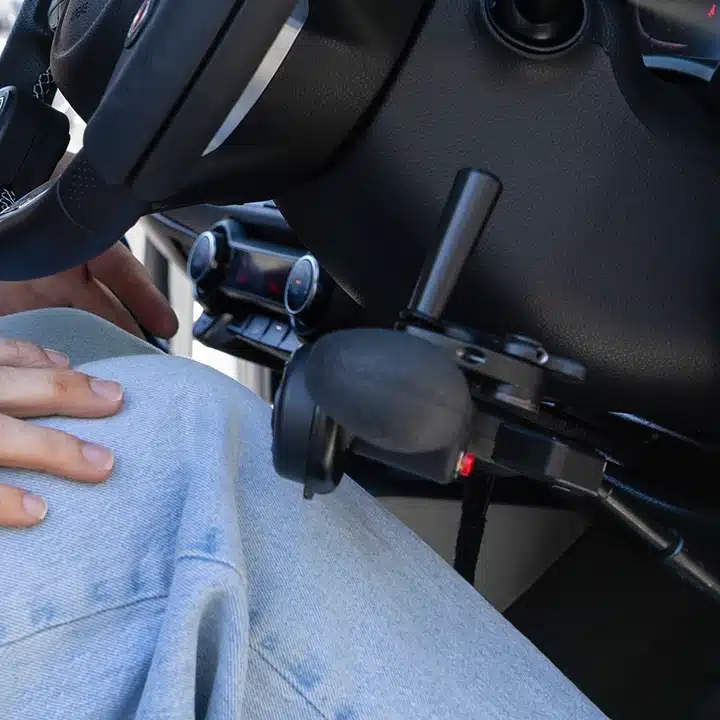
Push–Pull hand controls
Push on a lever to brake, pull on the same lever to accelerate. Simple, reliable, and one of the most commonly used systems. Great for everyday driving and ideal if you prefer a straightforward, mechanical feel.
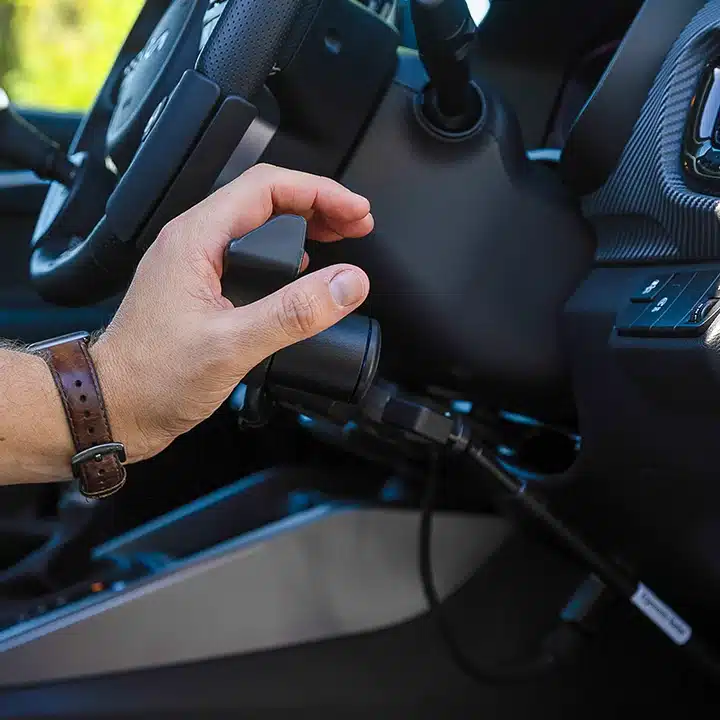
Radial hand controls
Rotate downwards on a lever toward your lap to accelerate, and push the same lever forward to brake. These are often used by people who have limited fine-motor strength to grip the hand control.
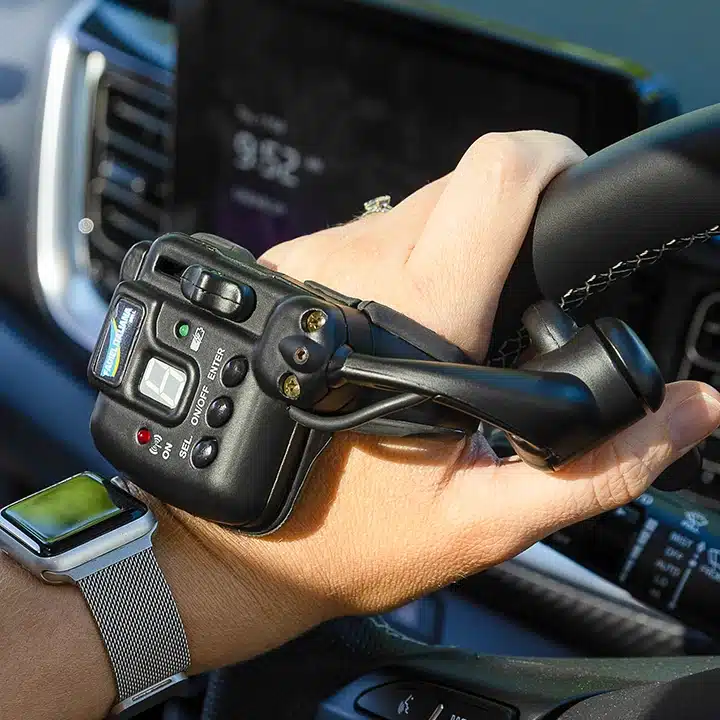
Trigger hand controls
Many modern hand controls provide acceleration through a lightweight trigger or spring-loaded mechanism. This may be fitted to your hand, operated wirelessly, or mounted to the top of the hand control. The trigger is normally operated with the thumb or index finger. Braking is achieved by pushing a brake lever away from the body.
Mechanical and electronic hand controls
Historically, hand controls were mechanically operated for braking and accelerating. Most hand controls still involve a mechanical action to brake: pushing the lever away from the body mechanically pushes on the brake pedal.
Modern hand controls may operate the accelerator through an electronic mechanism. This makes acceleration considerably lighter, improving energy conservation and reducing fatigue.
Many vehicles today require a hand control with an electronic form of accelerator due to advances in vehicle technology, including the presence of a knee airbag.
Floor mounted vs steering column mounted
Hand controls are typically mounted to the steering column or the vehicle floor. There are considerations for each, best addressed through an equipment trial:
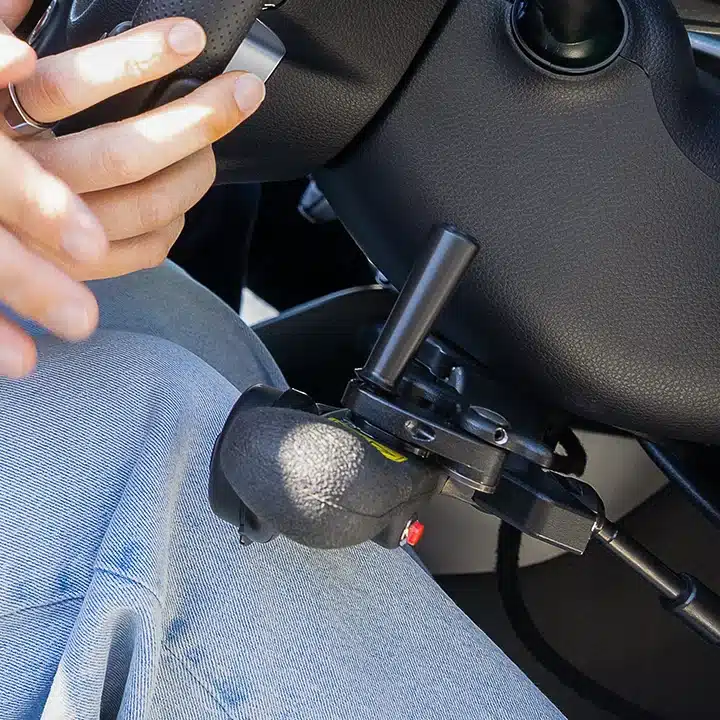
Steering column mounted
These protrude longitudinally from beneath the steering wheel. Most often they can be fitted to the right or left of the steering wheel, just underneath the indicator or windscreen wiper lever. This is the most common setup, largely due to having greater access to the indicator lever.
Limitations can apply, such as the steering column being locked after fitment (unable to adjust for individual users). This doesn’t impact most drivers, but it’s important to know.
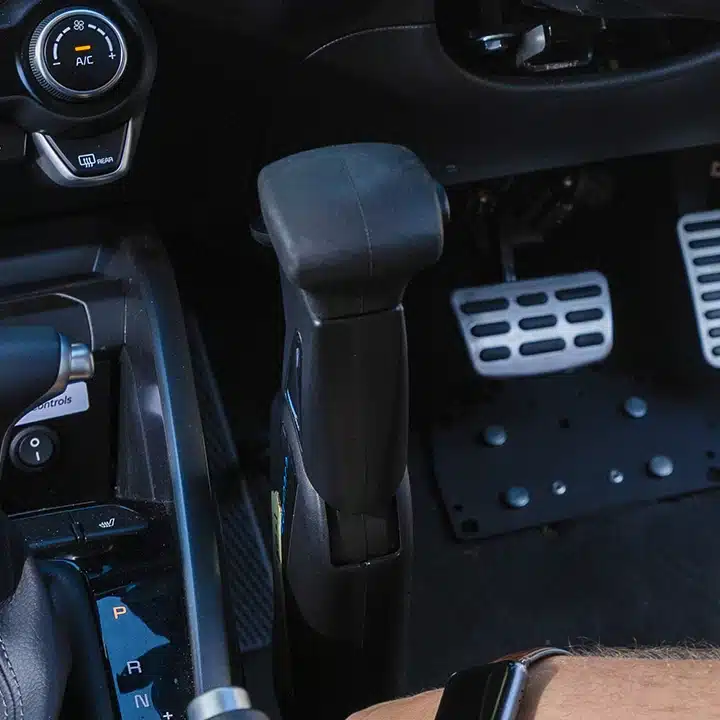
Floor mounted
This is mounted to the floor, to the left side of the driver. Benefits include not protruding into space that may be needed for transferring into the vehicle.
Potential drawbacks can include additional reach to indicators and less space in the driving position for larger people, due to the bar that connects the hand control to the brake running at an angle.
What if I don’t have the strength for typical hand controls?
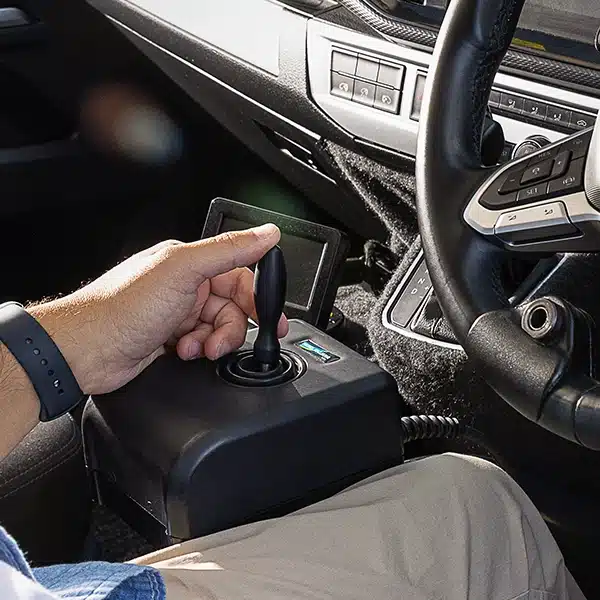
High level hand controls are available in Australia through companies such as Joysteer 3.0. This equipment can provide power-assisted acceleration and braking through various control inputs such as a joystick, slider or tilter.
High level driving aids may also combine braking, accelerating and steering into one mechanism, meaning it may be possible to drive using one hand.
These systems require thorough assessment, customisation and training.
“But how do I steer the car?”
Depending on the type of hand control required, you may also need a steering aid, often called a spinner knob. Spinner knobs enable the driver to steer with one hand. They may be:
- Simple, such as a ball or other grip
- Electronic, where they incorporate switches to operate functions such as indicators, horn, headlights, windscreen wipers, or other controls
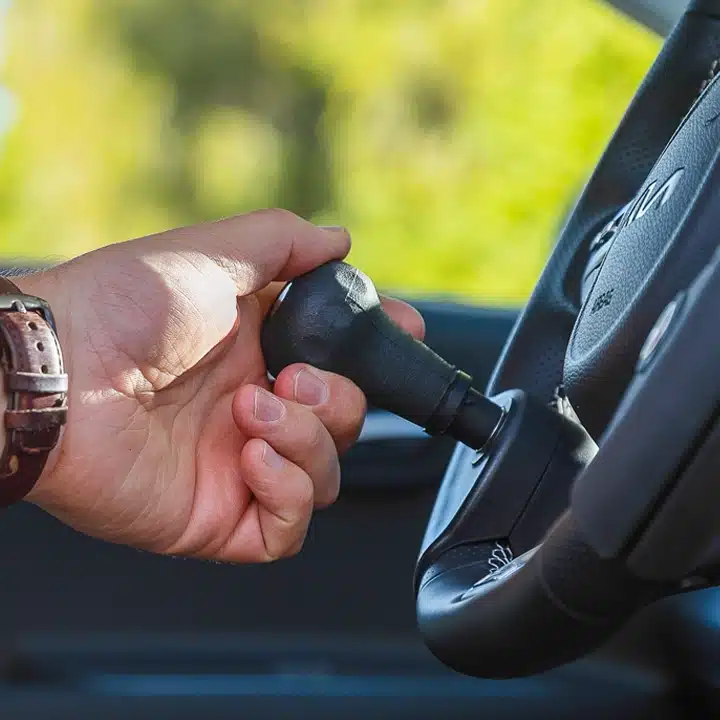
Simple
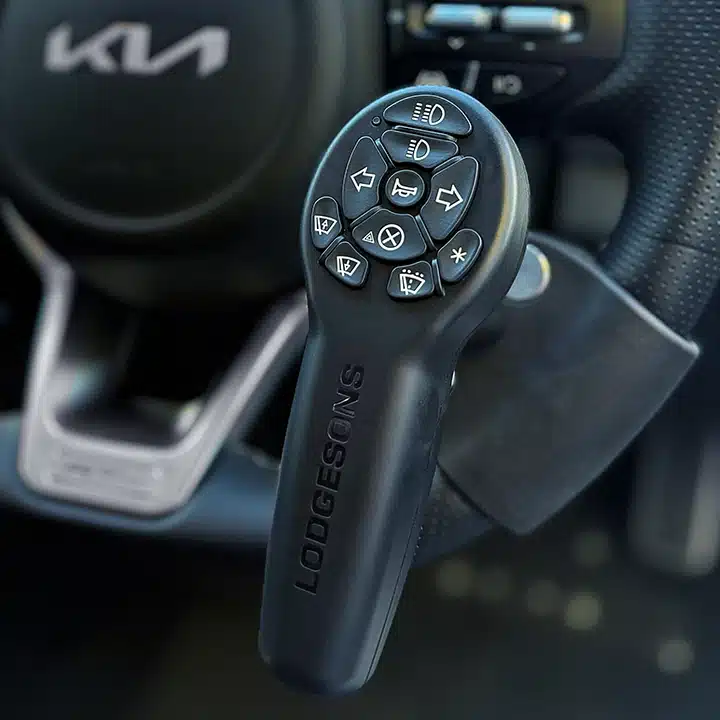
Electronic
Much like the high level driving aids above, steering can also be achieved through advanced secondary controls such as a joystick and micro wheel.
What if it starts raining or it gets dark?
Hand controls do not alter the existing functionality of your vehicle’s lights or windscreen wipers. These systems continue to operate in the standard way.
However, there may be situations where you are unable to remove your hand from the hand control to operate these functions safely. For example, when travelling downhill and needing to brake while approaching an intersection, both hands may need to remain engaged with braking and steering.
For this reason, we commonly recommend the use of an auxiliary switch system or keypad, such as the Lodgesons Mini Keypad (if you are not using an electronic spinner knob with integrated controls). This can be mounted directly to the hand control, allowing you to operate indicators, lights, wipers and other vehicle functions without compromising control of the vehicle.
This setup ensures safety is maintained, regardless of changing driving conditions or environmental demands.
Will I need to do some training, or can I just drive out of there?
In most cases, training is required.
We typically provide this in-house through our dual trained Driver Trained Occupational Therapists / Rehabilitation Driving Instructors. In some situations, we may also connect you with an external Driving Instructor.
After your hand controls are fitted, you may need a period of familiarisation to make sure you feel confident driving your own vehicle. This can also include practising with other equipment you use day-to-day, such as a wheelchair hoist, and gradually driving to the destinations you’ll soon be accessing independently.
Ready to explore your pathway to driving?
If you’re considering specialised driver training and want clear advice about your options, we’re here to support you.