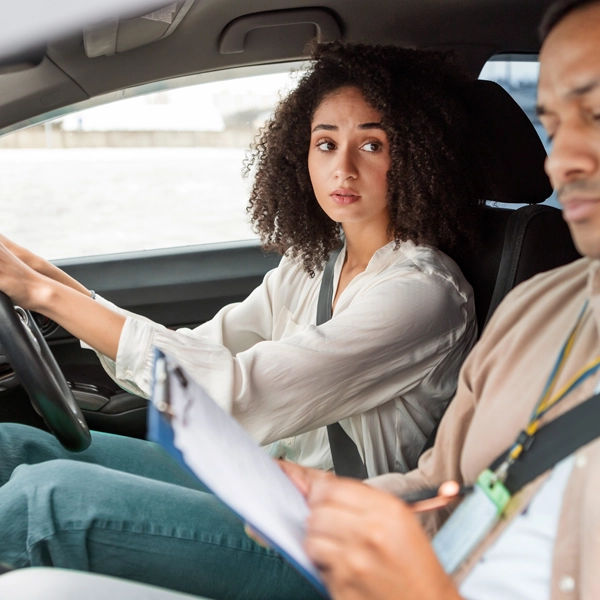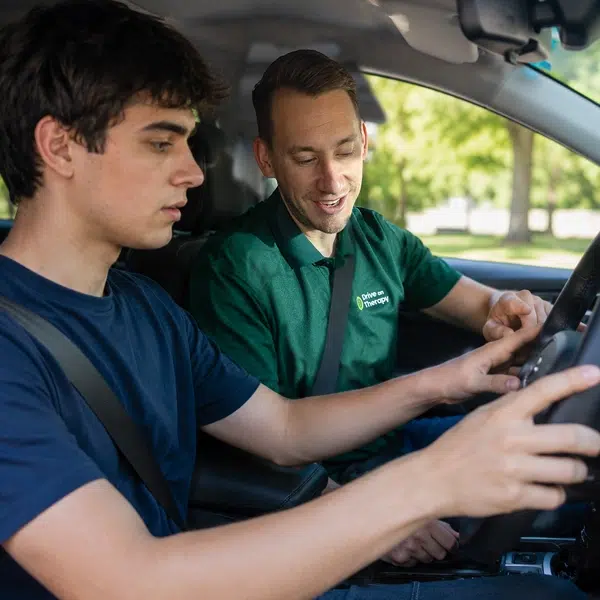
For people with verbal communication challenges, adapting the way we communicate can help ensure their true driving abilities are understood and assessed fairly.
Communication is more than talking
When people think about learning to drive, they often picture verbal instruction.
“Turn left here”“Check your mirrors”“Is it safe to go?”
For many individuals, understanding and responding to verbal information comes naturally. However, for people with receptive or expressive auditory language challenges, traditional driver assessment and training approaches may not accurately reflect their true driving potential.
At Drive On Therapy, we recognise that communication is much broader than spoken language. A person may have difficulty expressing themselves verbally while still understanding information, making decisions, processing road situations and safely operating a vehicle.
This is why driving assessments and training should be adapted to suit the individual’s communication style, rather than expecting them to fit a standard communication approach.
Verbal communication challenges and driving
Many people with intellectual disability, autism, acquired brain injury, cerebral palsy or other disabilities may experience difficulties with verbal communication.
This can include challenges with:
- Finding words
- forming sentences
- responding under pressure
- communicating quickly.
During a driving assessment, this does not automatically mean a person lacks the skills required to drive.
In fact, many people can demonstrate excellent understanding and decision-making through alternative forms of communication.
As Occupational Therapists, our role is to identify the most effective way for a person to communicate their understanding and interact with the driving environment.
Adapting driving assessments and training
Rather than relying solely on verbal responses, driving assessments and training sessions can be modified to allow individuals to demonstrate their knowledge and decision-making in ways that feel more natural and accessible.
Some strategies may include:
- Using simple visual supports and pictures
- safely using Augmentative and Alternative Communication (AAC) devices
- asking individuals to point to hazards, road signs or areas of the road environment
- using gestures to communicate understanding
- providing visual prompts instead of verbal questioning
- encouraging demonstrations rather than verbal explanations
- allowing extra processing time before expecting a response
- conducting individualised assessment and training sessions in smaller blocks, with consideration given to the individual’s communication needs.
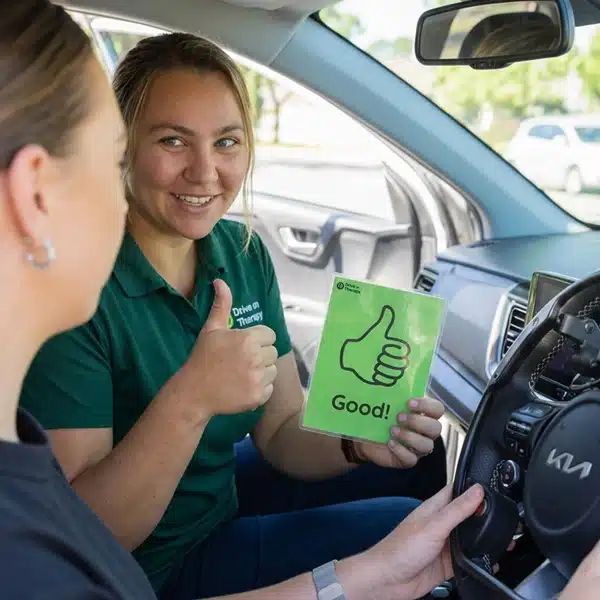
For example, instead of asking, “Is it safe to proceed?” and waiting for a verbal answer, a clinician may ask the individual to provide a thumbs up if they believe it is safe to go.
Similarly, a person may point towards a pedestrian, vehicle or road sign to demonstrate awareness of potential hazards.
These approaches often provide a more accurate representation of how an individual with verbal communication challenges perceives and responds to the driving environment.
Focusing on functional driving skills
The goal of a driver assessment is not to measure conversational ability.
The focus is on determining whether an individual can safely:
- Scan and interpret the driving environment
Identify hazards and risks - follow instructions
- make appropriate decisions
- control the vehicle safely
- respond to changing situations.
By using alternative communication methods, clinicians can better understand whether a person possesses the underlying skills necessary for driving, regardless of how they express themselves.
Reducing anxiety and building confidence
Traditional question-and-answer formats can place significant pressure on individuals who experience communication difficulties.
This pressure may lead to reduced confidence, increased anxiety and performance that does not accurately reflect their true abilities.
When assessments incorporate visual supports, gestures, demonstrations and individualised communication strategies, people are often more relaxed and engaged throughout the process.
This creates an environment where they can focus on the driving task itself rather than worrying about finding the “right words”.
A strengths-based approach
Every learner driver is different.
Some communicate verbally, some use gestures, some rely on visual supports, and others use a combination of communication methods.
A strengths-based driving assessment acknowledges these differences and focuses on identifying what a person can do, rather than what they cannot.
By adapting communication methods, Occupational Therapists can ensure assessments are fair, accessible and reflective of a person’s genuine driving capacity.
Ultimately, safe driving is about understanding the road, making sound decisions and responding appropriately to hazards.
While words can help us assess these skills, they are not the only way a person can demonstrate them.
At Drive On Therapy, we believe that everyone deserves the opportunity to be assessed in a way that recognises their individual strengths and communication style.
Sometimes, a thumbs up can tell us just as much as a verbal answer.
Looking for a more individualised Driving Assessment?
If you or someone you support experiences verbal communication challenges, a driving assessment can be adapted to better reflect individual communication needs.
Our Driver Trained Occupational Therapists can work with you to understand how you communicate, identify your strengths and ensure the assessment focuses on the functional skills that matter for safe driving.