Driving starts long before the driver's seat
Many people think learning to drive begins with starting the engine.
In reality, preparation often starts much earlier.
At Drive On Therapy, our driver trained occupational therapists look beyond the physical act of driving to understand the whole person. Through a potential to drive occupational therapy driving assessment, we evaluate factors such as motivation, routines, performance capacity and environmental influences using evidence-based occupational therapy frameworks, including the Model of Human Occupation (MOHO).
We also assess operational, tactical and strategic driving skills using the Michon Hierarchical Model of Driving Behaviour, helping us identify where support is needed and how best to build driving readiness.
Building the foundations for safe driving
Driving is one of the most complex everyday activities we perform.
It requires the integration of many different skills, including:
- Attention
- visual processing
- executive functioning
- emotional regulation
- motor coordination
- reaction time
- hazard perception.
Rather than introducing all of these demands at once, we often recommend beginning with foundational capacity building sessions that allow these skills to develop progressively.
Why we begin from the passenger seat
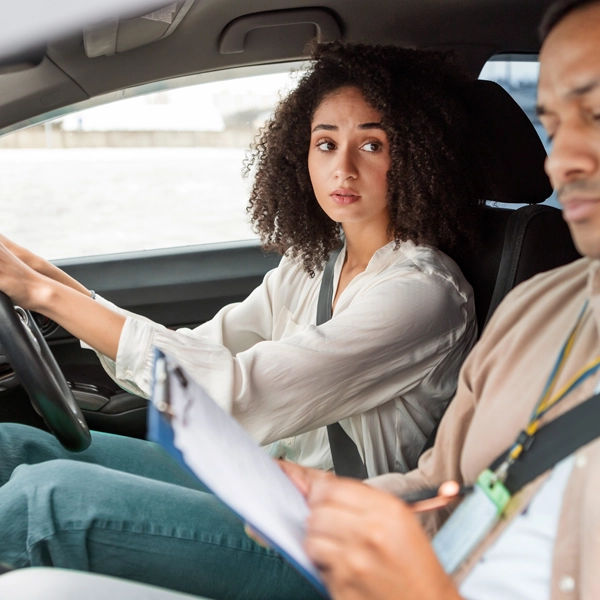
One of the most effective ways to build driving readiness is from the passenger seat.
Without the added demand of controlling the vehicle, learners can focus entirely on observing, processing information and making driving-related decisions.
This creates an ideal environment for developing the core skills that underpin safe driving.
Visual skills
Learners develop an understanding of:
- Where to look
- when to check mirrors
- shoulder checking
- scanning the driving environment
- observing hazards during different driving manoeuvres.
These habits become much easier to transfer once the learner begins driving independently.
Cognitive skills
Passenger activities provide opportunities to strengthen:
- sustained attention
- alternating attention
- hazard recognition
- information processing
- decision making.
These skills become much easier to carry over once the learner begins driving independently
Navigation and problem solving
Navigation is far more than following GPS directions.
As passengers, learners can practise:
- Planning routes
- giving directions
- identifying landmarks
- anticipating upcoming turns
- problem solving when plans change.
These experiences help build confidence before practical driving begins.
Road law knowledge
Passenger-based learning also allows learners to build practical understanding of:
- right of way
- intersections
- lane changes
- merging
- parking
- speed limits
- road signs.
Learning these concepts outside the driver’s seat reduces cognitive load during future driving lessons.
Sensory regulation and non-verbal communication
Driving involves processing a large amount of sensory information.
Foundational sessions help learners understand:
- Traffic lights
- indicators
- road signs
- gestures from other road users
- auditory cues
- visual stimuli
- tactile feedback.
For neurodivergent learners, developing sensory regulation strategies early can improve confidence and reduce overwhelm when driving independently.
Using technology to support learning
Technology can reinforce learning outside formal therapy sessions.
Driver training simulators and driving applications provide additional opportunities to practise concepts at home using devices such as an iPad or laptop.
These tools complement, rather than replace, practical driving experience.
Transitioning into the driver's seat
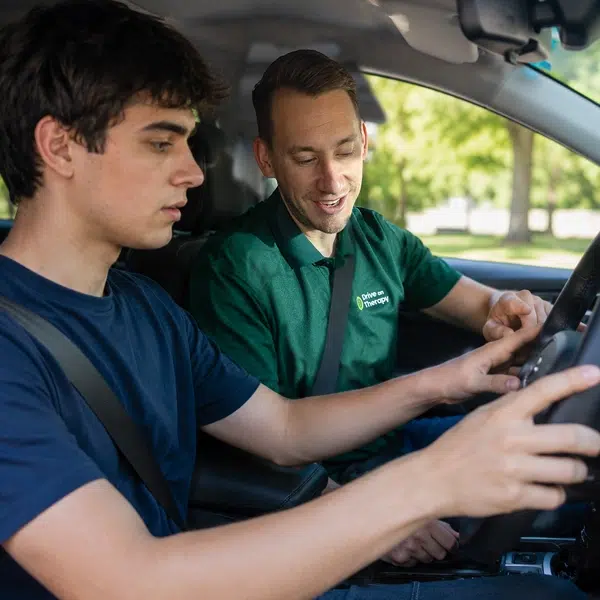
Once foundational skills have developed, learners begin practising early driving skills in a dual-controlled vehicle.
This allows knowledge gained as a passenger to be safely transferred into practical driving.
Graduated skill development
We always begin in the least demanding environments.
This may include:
- Large empty car parks
- quiet roads
- residential streets
Here, learners become familiar with:
- Steering
- pedal control
- vehicle positioning
- basic manoeuvres
As confidence grows, driving environments become progressively more complex.
This graduated approach is particularly beneficial for people with neurodivergent and neurodevelopmental disabilities, supporting long-term success while reducing anxiety.
A collaborative therapy approach
Every learner progresses differently.
Throughout the program, goals are developed collaboratively between the driver trained occupational therapist, the learner and their support team.
This ensures therapy remains:
- Personalised
- measurable
- achievable
- appropriately paced
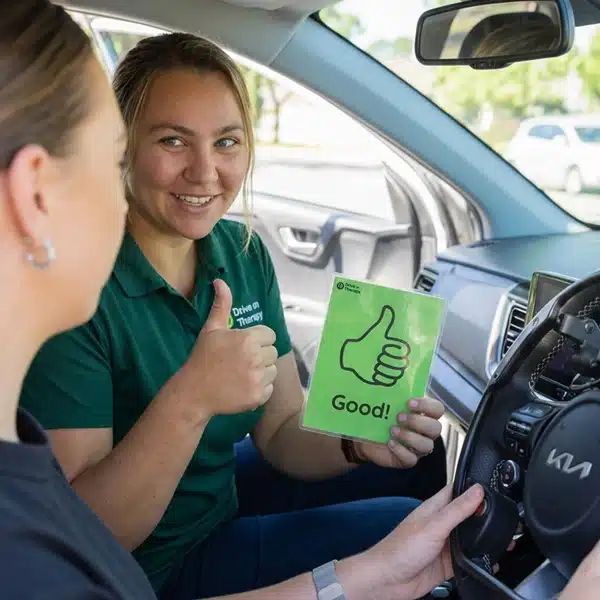
Working towards clearly defined goals helps maintain motivation while demonstrating meaningful progress over time.
Building confidence for families
Learning to drive is rarely an individual journey.
Parents, carers and other informal supports play an essential role in supervised driving practice.
One of our goals is to build the confidence of families so they feel prepared to continue practising outside formal therapy sessions.
This collaborative approach often leads to faster progress and greater confidence across different driving environments.
What happens next?
Depending on each learner’s needs, the next stage may involve ongoing Occupational Therapy support, specialised driver training or supervised practice with family members.
Continued Occupational Therapy support
Some learners, particularly those with more complex disabilities, benefit from ongoing support from a driver trained occupational therapist throughout their journey to licensing.
Specialised driver training
Many learners transition to a licensed driving instructor experienced in disability and rehabilitation.
This specialised driver training, which may be funded through the NDIS where appropriate, builds on the strong foundations developed during occupational therapy sessions.
Introducing the driving instructor during the later stages of early driving skills also helps create familiarity and supports a smooth transition between services.
Supervised driving with family
Regular supervised driving is one of the strongest predictors of success.
For neurodivergent learners, reaching licensing milestones may take considerably longer than average, making family involvement especially valuable.
Our driver trained occupational therapists and specialised driving instructors work closely with families to provide guidance, strategies and practical support throughout this journey.
Ready to build the foundations for driving?
Learning to drive doesn't begin with turning the key—it begins with developing the skills that make driving safe, confident and enjoyable.
Whether you're preparing to learn to drive yourself or supporting someone else, our driver trained occupational therapists can help build the foundations needed for long-term success.