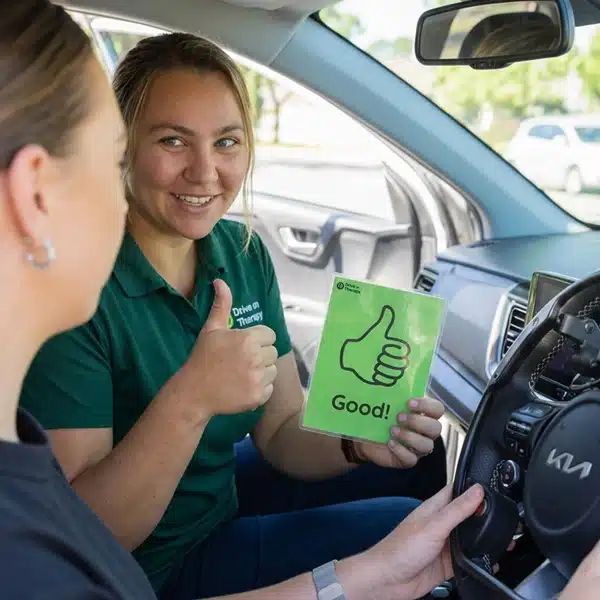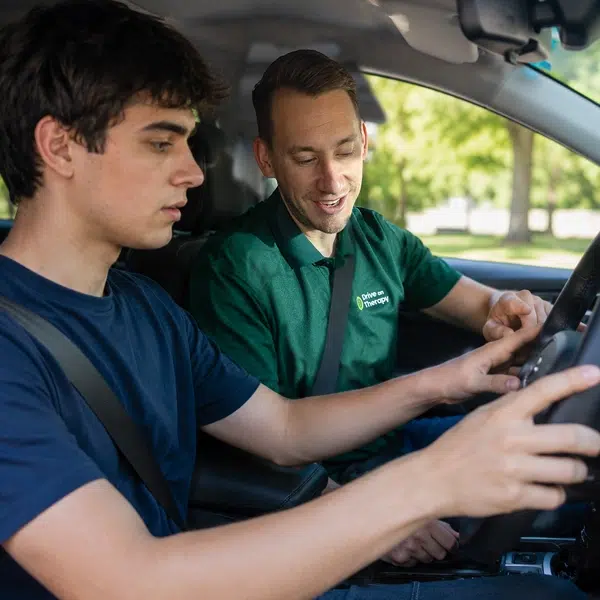
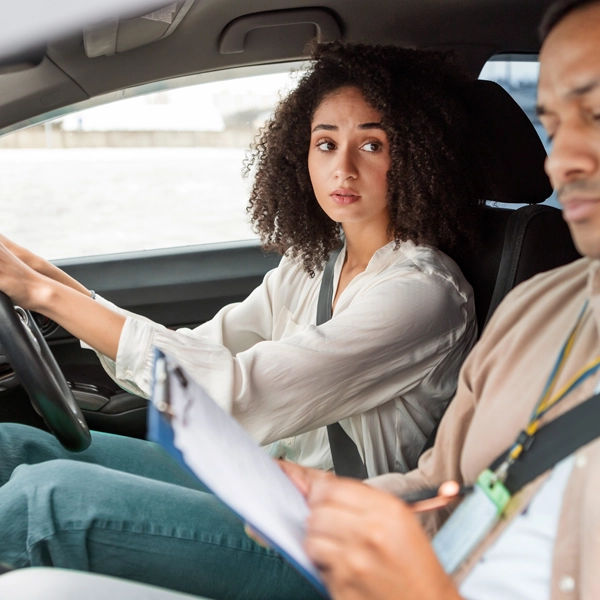
Here is the first thing to know: failing your driving test does not mean you are a bad driver, and it does not mean you will not become a safe, independent driver. For many people, passing the PDA takes more than one attempt. So take a breath, and let’s look at what happened and what you can do differently before your next test.
If you have failed your driving test in Perth, you are not alone
In 2023, pass rates across Perth’s Driver and Vehicle Services centres ranged from 34.2% at Mirrabooka to 48.9% at Success. At every Perth centre, more people failed than passed, and earlier analysis found WA had an overall PDA pass rate of around 35% against an Australian average of 62%.
Is 50 hours really enough?
For a learner under 25, 50 hours is currently the minimum supervised driving requirement in WA, including at least five hours at night. That is a relatively small amount of experience, and WA is changing the system: the State Government has announced reforms lifting the requirement from 50 to 80 hours, and night driving from five to ten. Even 80 is not a magic number. Learner drivers in NSW under 25 generally need 120 hours before the provisional licence test.
Many WA learners drive well beyond 50 hours, but once they hit the minimum they stop recording. So do not compare yourself to someone who says they “only did 50 hours.” You are seeing the number they logged, not the experience they actually accumulated.
For some people, learning to drive takes considerably longer
Research into driving has found Autistic learners can experience challenges with executive functioning, anxiety, visual search, motor coordination, processing information, planning and responding to social hazards. They may need more lessons, and may sit the practical test more often than their neurotypical peers. The literature describes learners with Autism as potentially requiring three times longer to learn to drive, and more again where there are mixed neurodiverse diagnoses.
But three times what? There is no exact number, and there should not be one, because every person is different. Needing significantly more practice does not mean you are failing. The goal is not to reach a minimum number of hours, it is to develop the skills and judgement to drive safely without someone beside you.
Passing the PDA is only one part of learning to drive
It is easy to think getting your licence is the finish line. It is the beginning. A private C class licence lets you drive independently on roads throughout Australia and in most countries overseas, and that is a huge responsibility.
The PDA assesses whether you can drive without supervision and transfer those abilities across any setting: vehicle control, road rules, fitting in with traffic, and responding to unexpected change and hazards. That is much more than a familiar route around a licensing centre. Ask yourself:
- Do I know what all road signs mean in WA?
- Do I know what to do when traffic lights stop working?
- Do I know how to manage following distances in different conditions?
- Can I manage unfamiliar roads?
- What do I do if I have a blown tyre?
- Can I make a safe decision when another driver does something unexpected?
- Can I navigate somewhere new without becoming overwhelmed?
If you have mostly practised in the same suburb, at the same time of day, in the same weather and with the same supervising driver, there are parts of driving you have not experienced yet.
Start with the feedback
The most valuable thing you have after a failed PDA is your assessment feedback. It can be hard to hear, and you might disagree with it, but do not let it disappear. Ask the assessor to explain what happened, and have your supervising driver or instructor listen too. It is fine to ask them to wait while you find your support person. Keep the result emailed to you, and check your email address is correct in DoT Direct before the test.
The Department of Transport publishes guidance on what is assessed during the PDA across flow, looking behind, movement, path, responsiveness, signals and vehicle management. There are also specific fail items: speeding, disobeying regulatory signs, causing or failing to respond to a crisis, and situations where the assessor intervenes to avoid danger. Use your feedback alongside the Department’s Driving Techniques for Safer Drivers resources.
Break the problem down
It is rarely as simple as “I failed at roundabouts.” The problem may not be the roundabout at all. You might be:
- Entering too quickly
- not scanning far enough ahead
- missing indicators from other vehicles
- struggling to identify a safe gap
- looking at the wrong things
- becoming overwhelmed by multiple vehicles
- not checking the mirrors when braking.
Each of those is a different skill. Say your feedback reads “insufficient observation at intersections.” Do not spend the next 10 hours hoping observation improves. Set a specific goal: at every intersection, identify relevant vehicles, pedestrians, cyclists, signs, signals and hazards, with a verbal announcement before proceeding.
Then practise deliberately. Start with quiet intersections, build to busier and unfamiliar ones, and drive them in poor weather or when you are tired. Your supervising driver can keep a tally: 10 intersections, 10 successful observations, 100%. That is something you can measure, which is very different from “I think I’m getting better.”
Get to know your car
Your vehicle is one of the things you can control. Do you know how to turn on the demister when the windows fog up, or the wipers when they are not on auto? Can you tell whether the park brake is still engaged? Do you know what the car feels like braking from 50 km/h compared with 80 km/h, and what the dashboard warning lights mean?
The assessor also checks the vehicle meets minimum PDA vehicle standards, including indicators, brake lights and handbrake, so practise that routine with your supervising driver. The better you know your vehicle, the less mental energy you spend thinking about it.
"I know how to drive. I just get really nervous."
This is incredibly common. Anxiety is real and it changes how you perform. You might know exactly what to do, but when the assessor gets into the passenger seat your brain feels like it has forgotten everything. Instead of saying “I get nervous,” ask what specifically makes you nervous:
- not knowing what the assessor is thinking, or the silence?
- being given multiple instructions at once?
- making a mistake and assuming you have already failed?
- an unfamiliar assessor, or an unfamiliar route?
- someone sitting close beside you, or feeling judged?
Once you identify the trigger you can work on it. If unfamiliar directions unsettle you, practise with different supervising drivers. Your mum might describe a manoeuvre one way, your dad another, your instructor another again. That variety teaches you the driving task itself, rather than dependence on one person’s language.
Try a mock PDA
A mock test with another driving instructor recreates being assessed by someone you do not know, without the consequences. It replaces “I have to pass” with “let’s see where I’m at,” which tells you whether the real issue is driving skill, test performance, unfamiliarity or anxiety.
Get comfortable with the test environment
PDA locations are hard to understand until you have spent time there. Joondalup is considerably different to Mirrabooka. Availability makes it tempting to jump between centres, but our advice is to wait and focus on passing from one. Make it your home ground:
- Know the centre. Where you check in and sit, where the assessor calls you from, where feedback is delivered, where the bathrooms are.
- Know the car park. Entry and exit, potholes, which bays suit reverse or forward parking, where to watch for traffic.
- Drive in every direction for at least 15 minutes before rebooking, practising your PDA exercises across the turns, road designs and intersections you may encounter.
The assessor is not trying to fail you
Assessors want you to pass, and nobody enjoys telling someone they have not met the standard. Their job is to determine whether you can drive safely without supervision, not to catch you out. Try changing the story from “the assessor is trying to fail me” to “the assessor is giving me the opportunity to show I’m ready.”
“The assessor didn’t talk to me. It was so quiet.”
They are meeting you for the first time and may keep conversation limited so they do not distract you or influence your performance. If talking helps, say so: “I’m quite nervous today. Talking a little helps me settle, is that okay?” They still assess your driving independently, but they understand a driving test is stressful.
Sometimes the best thing you can do is take a break
Sometimes the problem is not time spent driving, it is timing. If you are sitting exams, starting a new job, dealing with changes at home, undergoing treatment or struggling with sleep, a circuit breaker can be worthwhile. You do not have to give up, you can simply pause. A few weeks away does not erase the skills you have developed, and it often gives you space to come back stronger.
Common reasons people fail a PDA
A failed PDA is rarely one obvious mistake. It usually involves a combination of factors:
- Vehicle control: speed, steering, braking or positioning.
- Observation and hazard perception: missing vehicles, pedestrians, cyclists, signs or hazards, or seeing them too late.
- Decision making: choosing a safe gap, or decisions at intersections.
- Road rules: misinterpreting or forgetting them.
- Speed management: too fast, or too slow for the conditions.
- Lane positioning and signalling: holding the correct path, and using indicators correctly.
- Following distance: not leaving space as conditions change.
- Planning: deciding too late because you are not looking far enough ahead.
- Cognitive overload: managing several pieces of information at once.
- Communication: misunderstanding an assessor’s direction.
- Anxiety: knowing what to do but struggling to perform under pressure.
- Limited experience: not having driven in enough different environments.
The important thing is identifying which skills are actually causing the difficulty.
What if disability or a medical condition is part of the picture?
If you have failed your PDA multiple times and you have a disability or medical condition affecting your driving, it helps to look beyond the test itself. An Occupational Therapy Driving Assessment looks at how your individual function relates to driving. We are not just looking at whether you can steer a car around a block, we are interested in the underlying skills that make safe driving possible.
The question is not “why did I fail my test?” It is “what is happening underneath the driving difficulty, and what can we do about it?” That might mean targeted skill building with an Occupational Therapist or a driving instructor experienced in rehabilitation and disability, changing how driving is taught, adapting the vehicle, or recognising that more time and experience is needed before another PDA.
Make your next PDA count
The Department of Transport requires you to wait at least seven days before booking another PDA. Do not book simply because seven days have passed and you are hoping this time will be different. Before your next test, you should be able to answer:
- What did I struggle with, and why?
- What am I doing differently, and how am I practising it?
- How do I know I have improved?
- Can I perform the skill in different environments, not just my usual practice area?
If you cannot answer those yet, that is okay. It may simply mean you are not ready for another PDA. That is not failure, that is training.
We want you to pass, but we want something more important: for you to become a driver who can safely manage everything driving may throw at you. So do not see a failed test as the end of the road. See it as information. Find out what happened, break it down, practise the specific skills, build your experience, get the right support, and try again when you are ready.
Failed your driving test and not sure what to do next?
If you are experiencing repeated difficulties with your PDA and you have a disability or medical condition, Drive On Therapy can help. Our Occupational Therapy Driving Assessments look beyond the test itself to understand how your abilities relate to driving, identify areas of difficulty, and develop recommendations to help you progress towards safe and independent driving.
We can help you to be prepare for your PDA
Our goal is not simply to help you pass a test. It is to help you develop the skills, confidence and independence to safely control your own journey. Your driving journey isn't over. You might just need a different route to get there.